Keep what is already working.
Not every domain needs fixing. Strong areas deserve to be recognized and protected while you focus elsewhere.
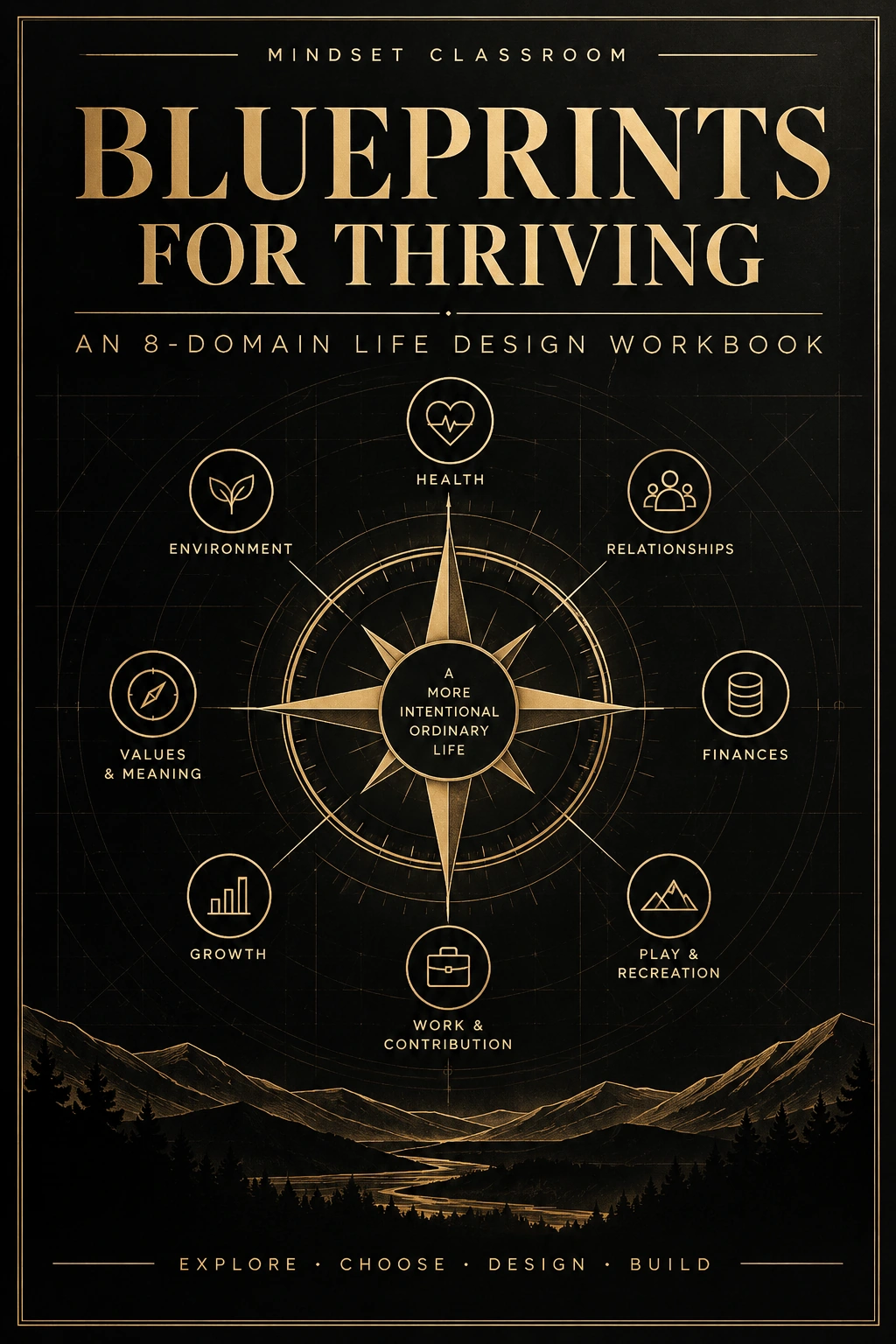
Blueprints for Thriving is a 32-page workbook for stepping back, surveying eight major life domains, deciding what deserves attention in this season, and turning those priorities into practical systems that fit the life you already have.
You probably do not need to improve everything. You need to understand what matters now.
Not yet available. Planned standalone price: $9.99 USD.
It is easy to notice ten things you could improve and turn self-development into another source of pressure. Blueprints for Thriving gives you a wider view first: what is already working, what actually deserves attention, what can remain as it is, and what kind of system would make the useful choice easier to repeat.
Not every domain needs fixing. Strong areas deserve to be recognized and protected while you focus elsewhere.
Identify one or two priorities for the season instead of trying to redesign your entire life at once.
Some areas can stay imperfect for now. Capacity is limited, and intentional design includes deciding what not to optimize.
Each domain is broken into practical dimensions so you can see what is actually happening before you decide what to change.
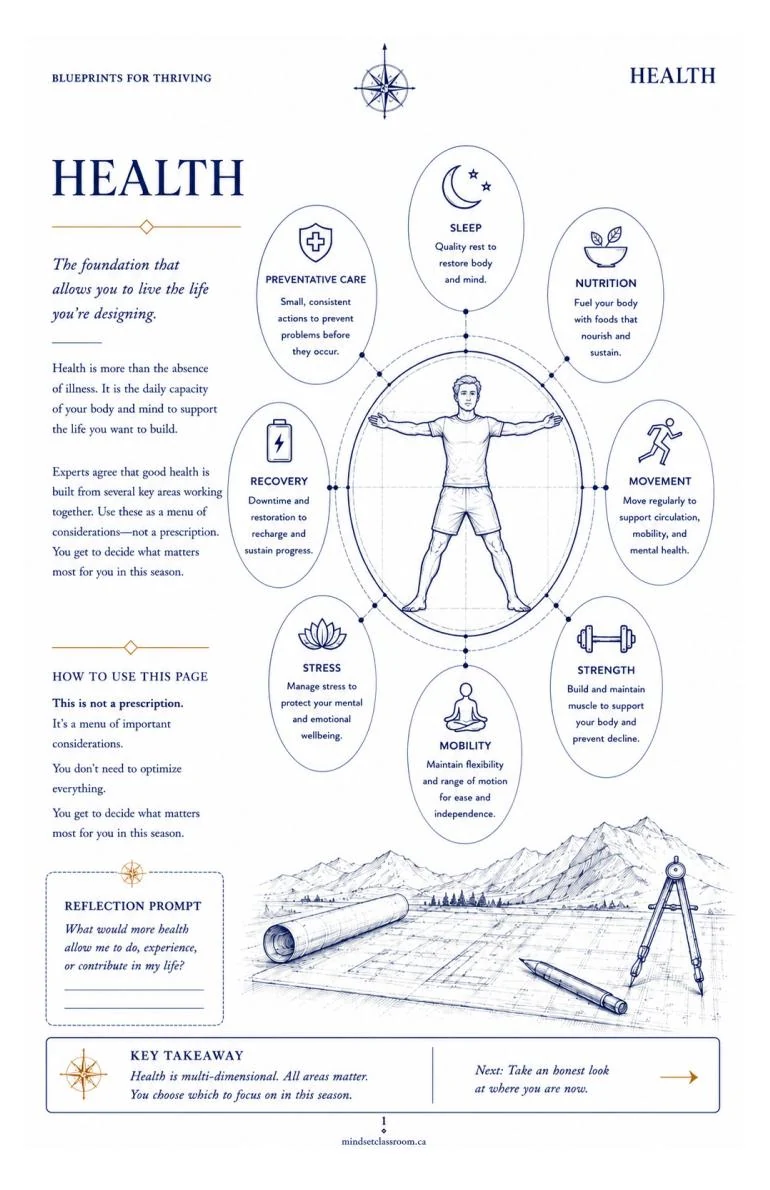
Sleep, nutrition, movement, strength, mobility, stress, recovery, and preventative care.
Connection, communication, time together, support, trust, repair, boundaries, and appreciation.
Cash flow, security, saving, investing, debt, income, flexibility, and generosity.
Joy, adventure, active play, nature, recovery, creativity, connection, and hobbies.
Purpose, strengths, growth, value, relationships, alignment, flexibility, and contribution.
Learning, skills, focus, experience, character, perspective, and deliberate development.
Purpose, values, alignment, meaning, service, legacy, spirituality, and gratitude.
Air and light, spaces, access, sensory fit, social environment, clutter, location, and nature.
The same four-part process repeats across all eight domains so the workbook stays easy to understand while the content changes with the area of life.
Start with a visual map of what the domain can include. It is a menu of considerations, not a prescription for what your life should look like.
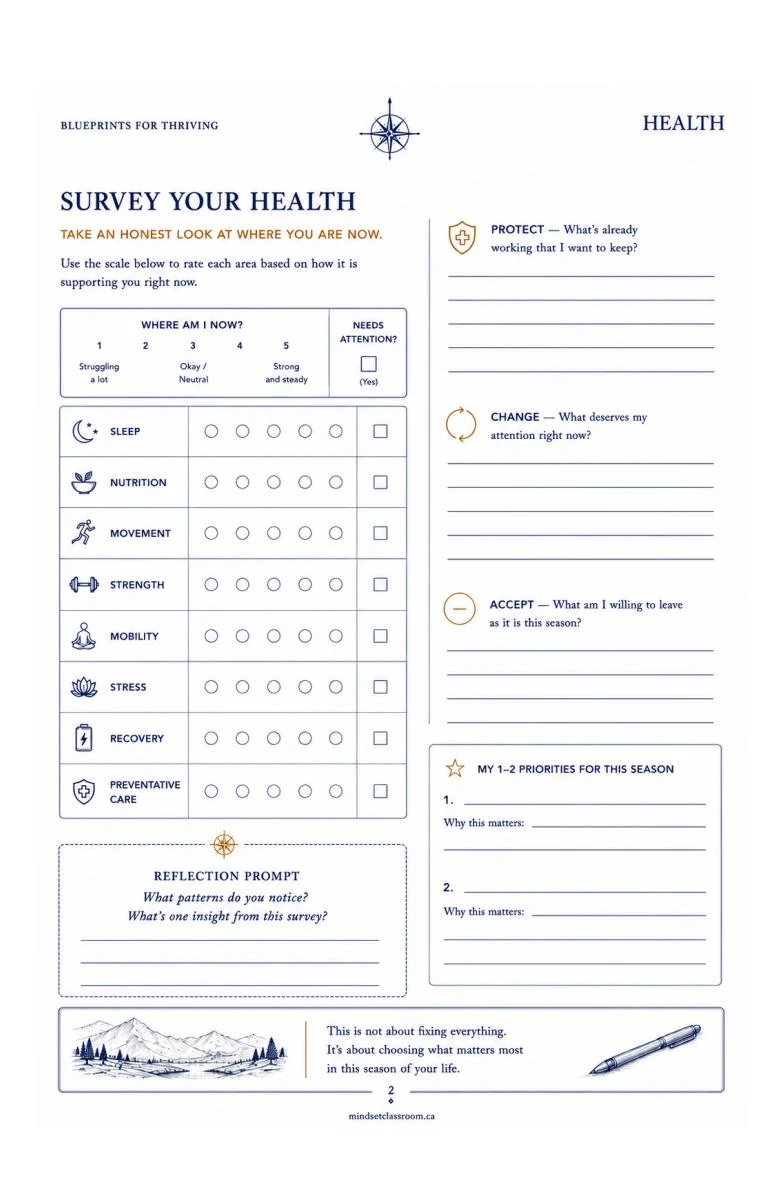
Rate where you are, notice patterns, then identify what should be protected, changed, or accepted in this season.
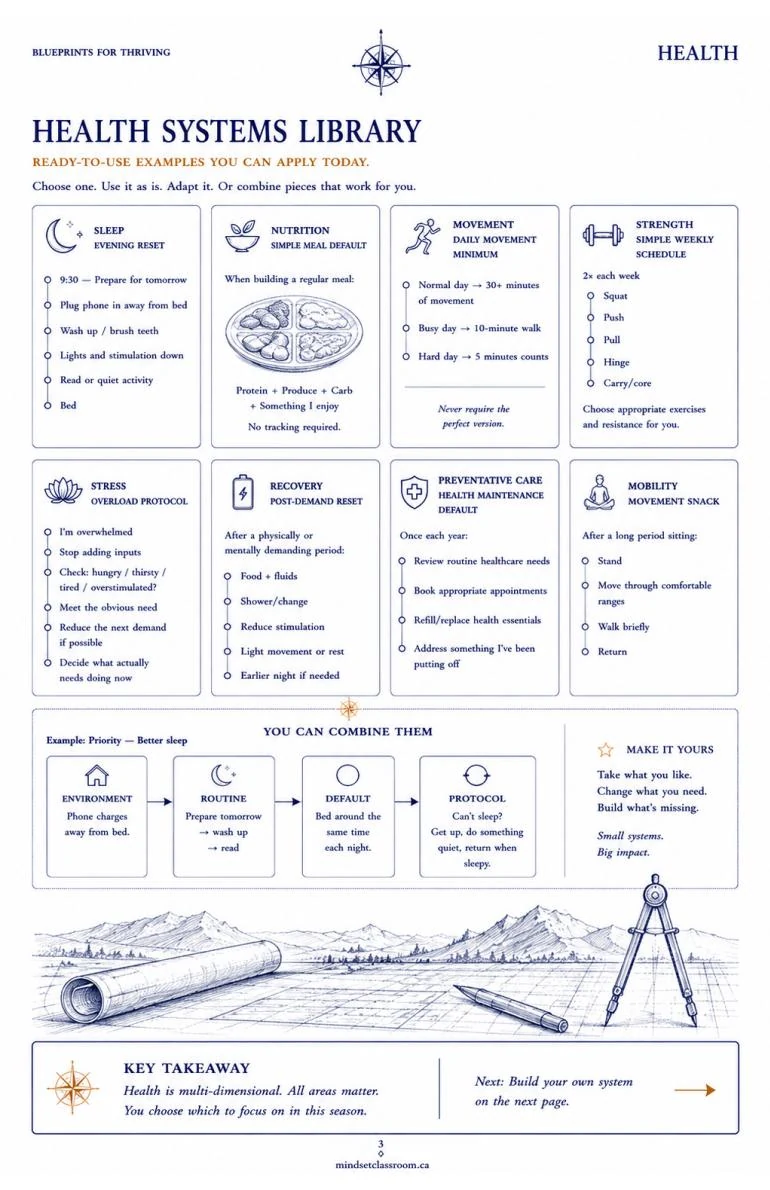
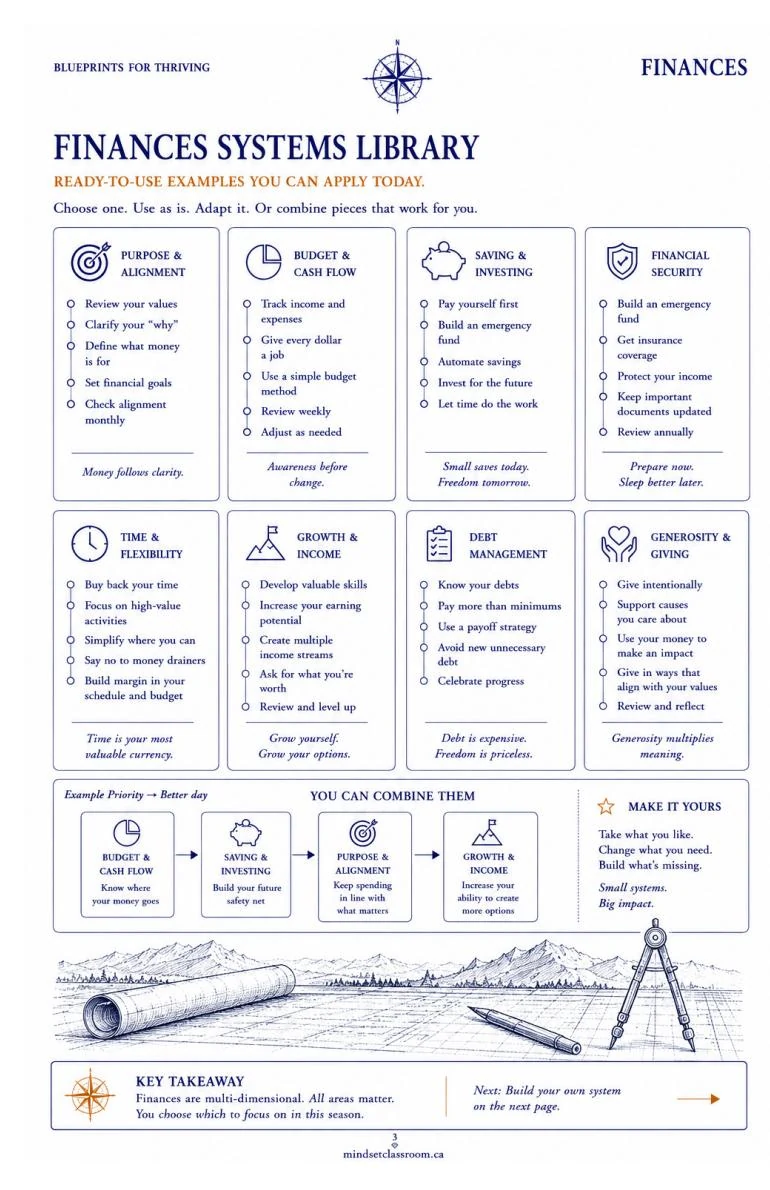
Browse ready-to-use examples you can use, adapt, combine, or ignore. The examples give you somewhere concrete to begin.
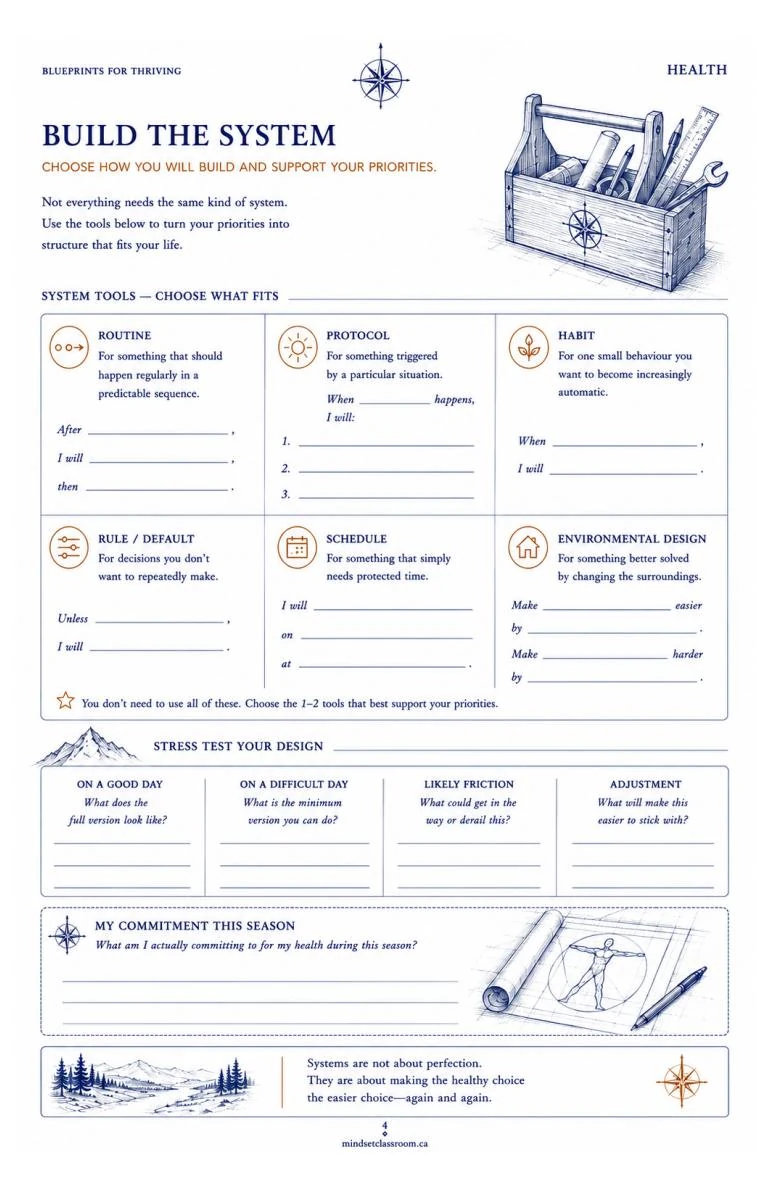
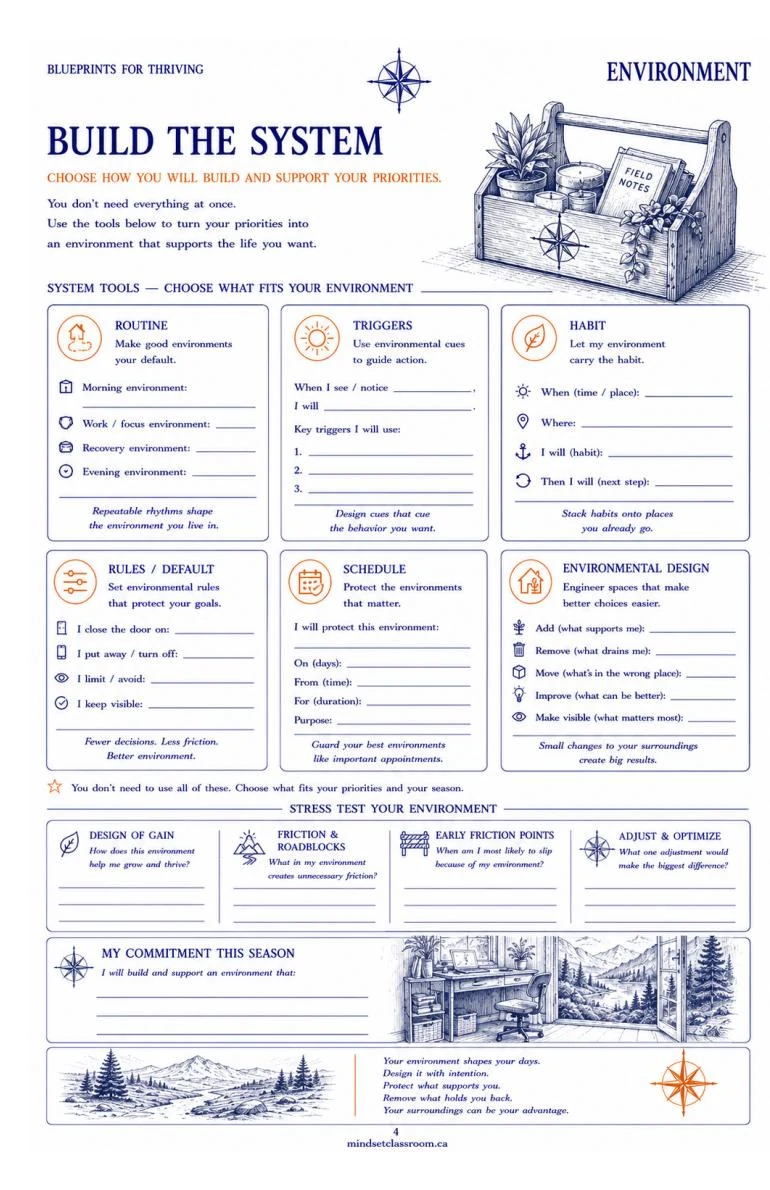
Choose the kind of structure that fits, stress-test it for real life, identify likely friction, and make the design smaller or easier where needed.
These samples show the four-page Health sequence, plus examples from Finances and Environment. Tap any page to open it larger.
The standalone product will include both versions when it launches.
Complete ratings, reflections, priorities, and system-building fields directly in the workbook, then save your finished blueprint on your device.
The full 32-page workbook is designed for clean US Letter printing with enough room to think, write, revisit, and redesign as life changes.
Blueprints for Thriving stands on its own, but it also serves as the hands-on companion to the life-design ideas in Rebirth of the Mundane.
If you read Rebirth of the Mundane digitally, Blueprints gives you the full writable 32-page process for all eight domains. Use it beside the book or use it entirely on its own.
The ebook is the reading experience. Blueprints is where you survey, choose, write, and build.
Blueprints for Thriving will be included with the paperback edition of Rebirth of the Mundane. Paperback readers will receive claim instructions so they can access the digital workbook at no additional charge.
The standalone $9.99 version is for people who want the workbook without buying the paperback, including ebook readers.
The two products overlap intentionally at the systems level, but they solve different moments.
Use it when the question is broader: what is working, what is not, what matters in this season, and what kind of system could support that part of life?
Use it when you already know the problem and need to build the routine in detail: anchor, sequence, capacity versions, breakpoint, environment, test, and restart.
A 32-page, eight-domain workbook for designing around reality instead of trying to optimize everything at once.