Orientation · Protocol 13
The Information Filter
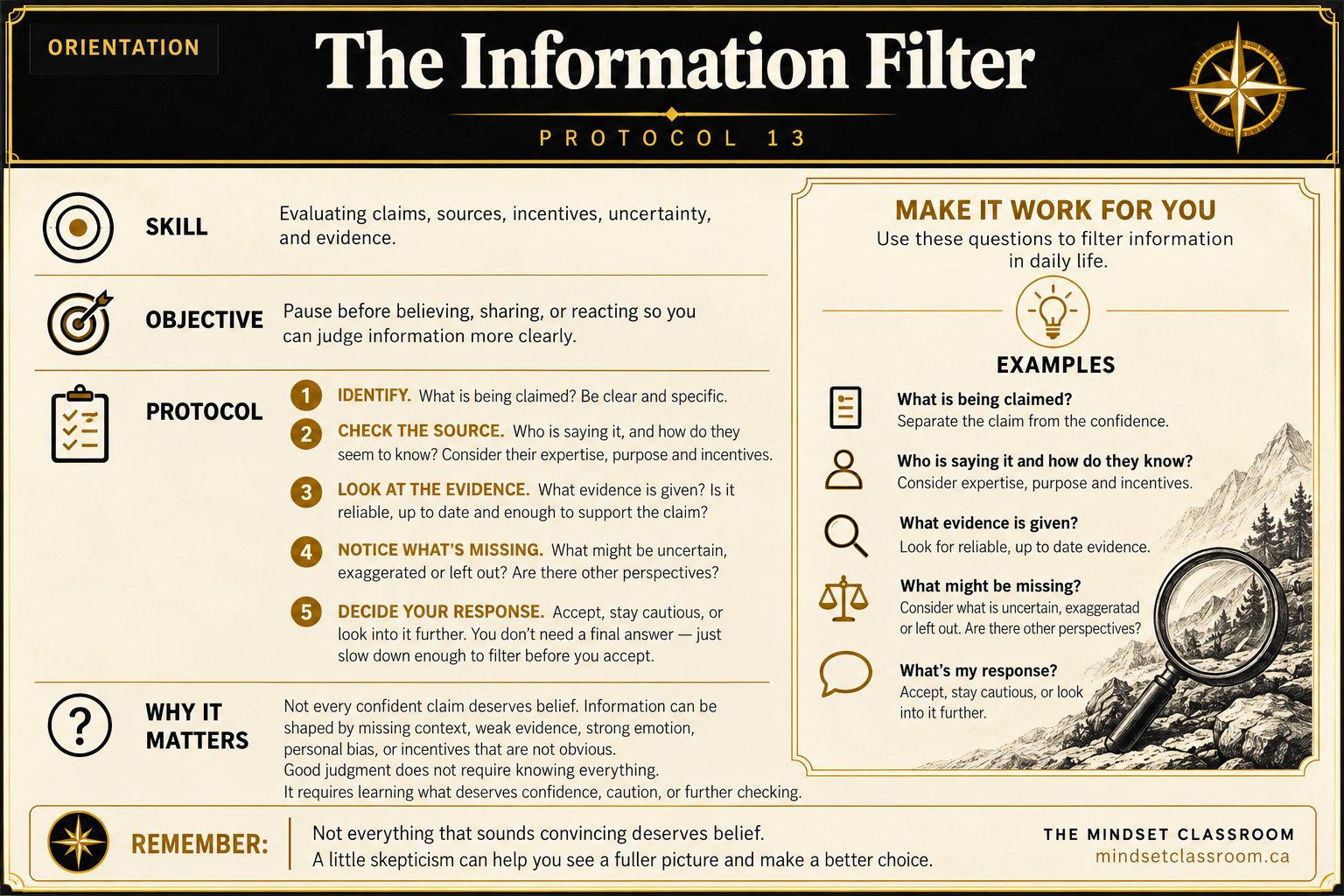
Evaluate claims, sources, incentives, uncertainty, and evidence. Pause before believing, sharing, or reacting so you can judge information more clearly.
Use the filter when a claim matters…
- Identify. What is being claimed? Be clear and specific.
- Check the source. Who is saying it, and how do they seem to know? Consider expertise, purpose, and incentives.
- Look at the evidence. What evidence is given? Is it reliable, up to date, and enough to support the claim?
- Notice what’s missing. What might be uncertain, exaggerated, or left out? Are there other perspectives?
- Decide your response. Accept it, stay cautious, or look into it further.
Make it work for you
Separate the claim from the confidence behind it. Ask who is speaking and how they know. Look for reliable, current evidence. Consider uncertainty, missing context, other perspectives, and incentives before deciding what you think.
Why it matters
Not every confident claim deserves belief. Information can be shaped by missing context, weak evidence, strong emotion, personal bias, or incentives that are not obvious. Good judgment does not require knowing everything; it requires learning what deserves confidence, caution, or further checking.
Remember
Not everything that sounds convincing deserves belief. A little skepticism can help you see a fuller picture and make a better choice.
Want the next one?
One new protocol each week.
Join the Weekly Protocol and get each new practical protocol when it’s released.
Join the Weekly Protocol